10 Common Business Naming Mistakes and How to Avoid Them
10 Common Business Naming Mistakes and How to Avoid Them
Common Business Naming Mistakes can create unnecessary challenges for entrepreneurs, startups, and small business owners. Choosing a business name is exciting, but a decision made too quickly may affect customer recognition, online visibility, and future branding.
Your business name appears on your website, social media profiles, packaging, advertisements, invoices, and customer communications. It is one of the most recognizable elements of your identity.
A name that is difficult to spell may make online searches harder. A name that closely resembles an existing brand can create confusion. A name that describes only one product may become restrictive when your business expands.
Fortunately, many common business naming mistakes can be avoided through careful research and practical planning.
This guide explains ten important mistakes, why they matter, and how to avoid them before committing to your business name.
1. Why Choosing the Right Business Name Matters
A business name helps customers identify and remember your company.
It should communicate an appropriate impression while remaining practical for websites, marketing materials, and everyday conversations.
A memorable name can support recognition, but it does not guarantee business success. Products, customer service, pricing, and marketing also influence results.
Understanding common business naming mistakes helps entrepreneurs make more informed branding decisions.
2. Mistake 1: Choosing a Name That Is Hard to Spell
One of the most common business naming mistakes is selecting an unusual spelling that customers cannot easily remember.
Creative spellings may appear distinctive, but they can become confusing when someone hears the name in conversation and later tries to search for it online.
For example, replacing several letters with numbers or unnecessary symbols may make the name harder to type.
How to avoid it: Choose simple spelling whenever possible. Ask someone to write your proposed name after hearing it spoken aloud.
If people regularly spell it incorrectly, consider simplifying the name.
3. Why Simple Spelling Supports Brand Recognition
Customers often discover businesses through conversations, recommendations, and online searches.
A name that is easy to spell can reduce unnecessary confusion.
Simple spelling is particularly useful for online stores, service providers, and businesses that rely on word-of-mouth recommendations.
However, simplicity should not come at the expense of distinctiveness. The goal is to balance memorability with originality.
4. Mistake 2: Selecting a Name That Is Too Similar to Competitors
Choosing a name that resembles an existing company may create confusion.
Customers could mistake your business for another organization, especially if both operate in related industries.
Similar names may also raise trademark concerns depending on the circumstances.
This is one of the common business naming mistakes that deserves careful attention before launch.
How to avoid it: Research competitors and existing businesses. Look beyond exact spelling matches and consider names that sound or look similar.
5. How to Research Competitor Names
Start with an online search for your proposed name.
Then search alternative spellings, abbreviations, and similar phrases.
Review businesses operating in your industry and target markets.
Look at their websites, products, services, and social media identities.
This research can help you develop a name that communicates your own business personality rather than imitating another brand.
6. Mistake 3: Ignoring Trademark Research
A business name may appear available on social media or through a domain registrar while still creating a potential trademark conflict.
Trademark rights and company registration are not the same thing.
One of the most serious common business naming mistakes is assuming that an available domain automatically means a name is legally safe to use.
How to avoid it: Research relevant trademark databases and seek qualified advice when appropriate.
For businesses targeting the United States, the official USPTO Trademark Search Resources explain how to investigate existing trademarks.
Businesses operating elsewhere should consult the relevant trademark authorities in their own jurisdictions.
7. Understanding Trademark and Business Registration Differences
A company registration identifies a business entity under applicable registration rules.
A trademark can identify the commercial source of particular goods or services.
Registering a company name does not automatically provide unrestricted rights to use that name as a trademark.
Similarly, registering a domain does not resolve all legal naming questions.
Understanding these differences can help prevent avoidable branding problems.
8. Mistake 4: Choosing a Name That Limits Future Growth
Some businesses select names that describe only one product or service.
This may seem useful initially, but it can become restrictive if the company expands.
For example, a store named around one specific phone accessory may later want to sell laptops, headphones, and other electronics.
How to avoid it: Consider your business’s likely direction over the next several years.
Choose a name that fits your current offering while allowing reasonable flexibility.
9. How to Choose a Flexible Business Name
Start by identifying the broader value your business provides.
Instead of focusing entirely on one product, consider a name that reflects your audience, experience, or overall business personality.
A flexible name should remain relevant if you introduce related products or services.
However, avoid making it so broad that customers cannot understand what your company does.
10. Mistake 5: Making the Business Name Too Long
Long business names can be difficult to remember and inconvenient to use.
They may also become awkward in logos, website headers, packaging, and social media usernames.
Among common business naming mistakes, unnecessary length is relatively easy to identify before launch.
How to avoid it: Remove words that do not add meaningful information.
Test how the name appears in a small logo and how naturally it sounds when spoken.
11. Finding the Right Name Length
There is no universal rule for the ideal number of words in a business name.
Some successful brands have short names, while others use longer descriptive phrases.
The important considerations are clarity, pronunciation, memorability, and practical use.
Choose a length that supports your brand rather than following an arbitrary formula.
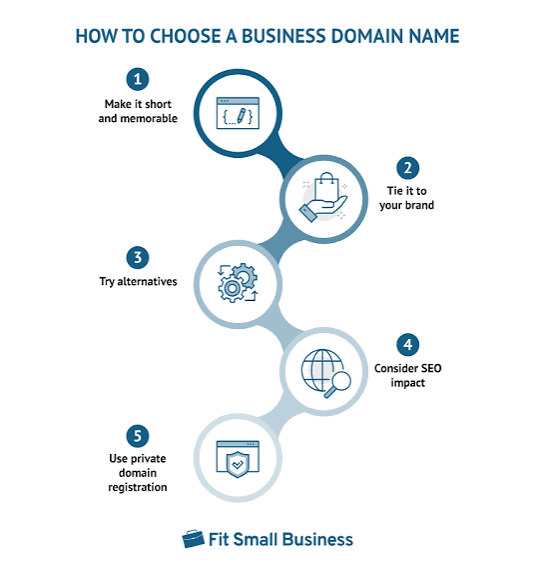
12. Mistake 6: Ignoring Domain Name Availability
A business may invest in branding before checking whether a suitable website domain is available.
This can create difficulties when launching an online store or company website.
A domain that closely matches your brand can help customers recognize your online presence.
How to avoid it: Check domain availability early in the naming process.
Consider relevant extensions and look for similar existing domains.
Remember that domain availability does not establish trademark clearance.
13. Choosing a Practical Website Domain
A good domain should be easy to type, remember, and communicate.
Avoid complicated punctuation, excessive hyphens, and unnecessary spelling variations.
Consider how the domain will look in email addresses and promotional materials.
The best option is not always the shortest one; it should be clear and suitable for your business.
14. Mistake 7: Forgetting Social Media Username Availability
Social media profiles often form an important part of business marketing.
If your preferred name is unavailable across relevant platforms, customers may have difficulty recognizing your accounts.
This is another of the common business naming mistakes that can be identified through early research.
How to avoid it: Search your preferred name on the platforms your audience uses.
If an exact match is unavailable, consider a clear alternative that does not imitate another business.
15. Keeping Your Digital Brand Consistent
Your website, social profiles, and business communications should present a recognizable identity.
Using similar names, logos, colors, and descriptions can help customers connect your different channels.
Exact usernames are not always necessary.
The main objective is to avoid confusion and maintain consistent brand presentation.
16. Mistake 8: Choosing a Name Without Understanding Your Audience
A name that appeals to the business owner may not communicate the right message to potential customers.
Different audiences have different expectations.
For example, a playful name may suit a children’s activity business but feel inappropriate for some professional services.
How to avoid it: Identify your target customers and consider what they expect from a business in your industry.
Test your preferred name with people who represent that audience.
17. Understanding Your Target Customers
Before selecting a name, consider your customers’ needs, interests, and purchasing motivations.
Ask what kind of business they expect to find when hearing your proposed name.
Their responses can reveal whether the name communicates the intended personality.
Audience feedback is useful, but it should be considered alongside practical and legal research.
18. Mistake 9: Following Naming Trends Too Closely
Trendy words and fashionable spelling styles may appear attractive during a particular period.
However, trends change.
A name built entirely around a temporary trend may become less relevant as the market evolves.
How to avoid it: Choose wording that reflects your business’s long-term identity.
Trends can provide inspiration, but they should not determine the entire naming strategy.
19. Creating a Name That Can Last
A lasting business name should remain meaningful as the company develops.
Consider whether the name would still feel appropriate if your business expanded, introduced new products, or reached a different audience.
Avoid choosing a name solely because it resembles popular startups.
Distinctive, relevant wording is usually a stronger foundation for long-term branding.
20. Mistake 10: Rushing the Final Decision
Entrepreneurs are often eager to launch their businesses.
This excitement can lead to choosing a name before completing essential research.
Rushing is one of the common business naming mistakes that can create expensive changes later.
How to avoid it: Create a shortlist, complete availability checks, gather feedback, and review the final options carefully.
A few extra days of research may prevent unnecessary problems after launch.
21. Why Business Name Research Should Come First
Branding materials can require significant time and money.
These may include logos, website development, packaging, printed materials, advertisements, and business documents.
If the name later changes, some of this work may need to be repeated.
Complete the important naming checks before making major financial commitments.
22. Create a Shortlist of Business Names
Instead of selecting the first name you like, develop several possibilities.
Three to five options can provide a practical starting point.
Evaluate each name against the same criteria.
This approach makes it easier to compare strengths, weaknesses, and potential risks.
23. Business Name Comparison Checklist
Use this simple table to organize your research.
| Naming Check | Option A | Option B | Option C |
|---|---|---|---|
| Easy to spell | Check | Check | Check |
| Easy to pronounce | Check | Check | Check |
| Memorable | Check | Check | Check |
| Relevant to audience | Check | Check | Check |
| Competitor search | Check | Check | Check |
| Trademark research | Check | Check | Check |
| Domain availability | Check | Check | Check |
| Social usernames | Check | Check | Check |
| Future flexibility | Check | Check | Check |
Replace each placeholder with your actual findings.
24. How to Test a Business Name
Share your shortlisted names with a small group of potential customers.
Ask them what each name suggests about the business.
You can also test pronunciation and spelling.
Avoid explaining your intended meaning before gathering feedback.
This helps you understand how people interpret the name naturally.
25. Consider the Meaning of Your Name
Words can carry different meanings in different languages and cultures.
If your business serves international customers, investigate possible unintended meanings.
A name that sounds appropriate in one language may create confusion elsewhere.
Basic language research can help identify potential problems.
26. Review Your Business Name in Search Results
Search your proposed name and examine the results.
Look for existing companies, products, organizations, and unrelated meanings.
If many businesses already use similar wording, customers may find it harder to distinguish your brand.
Search visibility should be considered alongside naming originality and legal suitability.
27. Think About Your Brand Personality
Your business name should fit the identity you want to build.
A professional consulting business may prefer a clear and confident name.
A creative gift shop may benefit from a warmer or more playful approach.
There is no single naming style that works for every industry.
28. Match Your Name With Your Visual Identity
A business name should work well with your logo, colors, and typography.
Test the name in different formats before finalizing it.
It should remain readable on websites, social media profiles, business cards, and packaging.
A practical name makes future design work easier.
29. Avoid Misleading Business Names
A name should not create inaccurate expectations about your products, services, qualifications, or business activities.
For example, avoid implying official government affiliation or professional accreditation that your company does not possess.
Clear and accurate branding supports customer understanding.
30. Understand the Cost of Renaming a Business
Changing a business name after launch can involve several expenses.
You may need to update your website, branding materials, business records, social media profiles, and customer communications.
Some changes may also require legal or administrative work.
Researching common business naming mistakes before launch can reduce the likelihood of avoidable renaming costs.
31. What to Do if Your Preferred Name Is Already Taken
If another business uses your preferred name, investigate the situation carefully.
Do not assume that adding a word or changing one letter eliminates potential confusion.
Consider developing a more distinctive alternative.
If trademark concerns remain, seek professional advice before proceeding.
32. Use a Practical Business Naming Checklist
Before committing to a name, confirm that you have:
- Searched the name online.
- Checked alternative spellings.
- Reviewed competitor names.
- Researched relevant trademarks.
- Checked business registration records.
- Reviewed domain availability.
- Checked social media usernames.
- Tested pronunciation and spelling.
- Considered your target audience.
- Evaluated future growth opportunities.
- Reviewed potential cultural or language concerns.
33. Learn How to Check a Business Name Properly
Avoiding common business naming mistakes becomes easier when you follow a structured research process.
For a detailed guide, read How to Check a Business Name Before You Commit: A Practical Checklist.
This related resource explains important checks involving business records, trademarks, domain names, and social media availability.
34. Build Your Brand After Choosing the Name
Once your name has passed the necessary checks, begin developing your brand identity.
Choose suitable colors, typography, and a logo that reflects your business personality.
Prepare clear messaging that explains your products or services.
Keep the visual identity consistent across important platforms.
35. Prepare for Your Business Launch
Before launching, review your website, contact details, social media profiles, and marketing materials.
Make sure the business name appears consistently.
Confirm that the information customers need is accurate and easy to find.
A coordinated launch can reduce confusion and create a more professional introduction.
36. Frequently Asked Questions
What are the most common business naming mistakes?
Common mistakes include difficult spelling, similarity to competitors, ignoring trademark research, choosing restrictive names, and failing to check domains or social usernames.
Should a business name be short?
A shorter name may be easier to remember, but clarity and relevance matter more than a specific word count.
Can two businesses have similar names?
It depends on the circumstances, including applicable law, trademark rights, goods and services, and potential customer confusion. Professional advice may be necessary.
Does buying a domain protect my business name?
No. Domain registration does not automatically establish trademark rights or guarantee legal permission to use a name commercially.
Should I check trademarks before launching?
Yes. Relevant trademark research is an important part of evaluating a proposed commercial name.
37. Final Business Naming Checklist
Before making your final decision, ask yourself:
- Can customers spell the name easily?
- Is it simple to pronounce?
- Is it sufficiently distinctive?
- Does it suit the intended audience?
- Have I researched relevant trademarks?
- Have I checked business records?
- Is a suitable domain available?
- Can I create recognizable social profiles?
- Will the name support future growth?
- Have I completed the necessary research before investing in branding?
38. Final Thoughts
Avoiding common business naming mistakes is an important step toward building a recognizable and practical business identity.
The best name is not necessarily the most creative or unusual. It should fit your business, make sense to customers, and be supported by appropriate research.
Take time to compare several options, investigate existing uses, and test your preferred name before committing.
A thoughtful naming decision can provide a stronger foundation for your website, marketing materials, and future business growth.