Creative Business Naming & Branding Ideas – Build a Memorable Brand | Creative Future Vision
Creative Future Vision: Creative Business Naming Ideas, Branding Inspiration & Strategies for Building Memorable Brands
Creative Ideas. Confident Brands.
Every successful business begins with an idea, but turning that idea into a recognizable and memorable brand requires creativity, planning, and a clear vision. Whether you are launching a new startup, building an online store, developing a small business, or refreshing an existing company, the right name and brand identity can make a meaningful difference in how people discover, understand, and remember your business.
Welcome to Creative Future Vision, your destination for creative business naming ideas, practical branding guides, brand identity inspiration, and fresh perspectives for entrepreneurs and business owners. Our goal is to make the process of developing a business identity easier, more understandable, and more inspiring.
We believe that a business name should communicate more than just what a company sells. It should reflect its personality, values, purpose, and future direction. Similarly, a strong brand identity should create a consistent impression across websites, social media platforms, marketing materials, and customer experiences.
Finding the right business name, choosing suitable brand colors, writing an effective tagline, and creating a memorable visual identity are important steps in building a business that people recognize and trust.
At Creative Future Vision, we explore these topics through informative articles, creative suggestions, practical checklists, and easy-to-follow strategies. Whether you are searching for unique business name ideas, exploring branding trends, or learning how to create a recognizable brand, you can find helpful inspiration to support your next creative project.
Our mission is simple: to turn creative ideas into confident brand identities.
Discover Creative Business Naming Ideas
Choosing a business name is one of the first important decisions when starting a new company. Your business name introduces your brand to potential customers and creates an initial impression before people even explore your products or services.
A memorable business name can help customers recognize your company, understand its personality, and distinguish it from competitors. However, finding the perfect name is not always easy. Entrepreneurs often spend considerable time exploring different words, combinations, creative expressions, and naming styles before discovering an option that feels right.
Creative Future Vision provides business naming inspiration to help simplify this process.
Whether you are creating a technology startup, launching a fashion brand, opening a beauty business, developing a consulting company, or building an online store, your naming approach should reflect the nature and direction of your business.
What Makes a Good Business Name?
A good business name should be memorable, meaningful, relevant, and easy to communicate. It should represent your brand while remaining flexible enough to support future growth.
Consider the following characteristics when evaluating potential business names:
1. Simplicity and Clarity
Simple business names are generally easier to pronounce, remember, and share. Complicated spellings and unnecessarily long names may create confusion when customers search for your business online.
2. Originality
Your business name should have its own identity. Avoid selecting names that are too similar to established companies, especially those operating in the same industry.
3. Relevance
A business name should connect with your industry, audience, or brand personality. It does not necessarily need to describe your products directly, but it should make sense within your overall brand strategy.
4. Memorability
A distinctive name can make your business easier to recognize. Creative word combinations, meaningful expressions, and carefully selected keywords can help create a lasting impression.
5. Future Flexibility
Think about where your business may be in five or ten years. A name that is too specific may limit your ability to introduce new products, services, or business categories.
Business Naming Ideas for Different Industries
Different industries require different naming approaches. A technology startup may prefer modern and innovative language, while a handmade product business may benefit from a warm and personal identity.
For example, technology businesses can explore words related to innovation, intelligence, digital solutions, and progress. Fashion brands may prefer names associated with style, elegance, creativity, and individuality.
gtavispot.com
Food businesses can explore naming concepts related to freshness, taste,
hospitality, and quality. Consulting companies may choose names that communicate expertise, reliability, and professional confidence.
Creative Future Vision explores different naming styles and business categories to help entrepreneurs discover ideas that match their vision.
Before choosing a name, remember to check domain availability, social media username availability, existing business registrations, and relevant trademark databases. A creative suggestion is not automatically a legally available business name.
Build a Strong and Recognizable Brand Identity
A business name is only one part of a successful brand. Your brand identity includes the visual and verbal elements that communicate who you are, what your business represents, and how customers should recognize your company.
A recognizable brand identity creates consistency across different customer touchpoints. When people encounter your business on a website, social media page, advertisement, or product package, they should experience a consistent visual and communication style.
Developing a strong brand identity requires more than selecting an attractive logo. It involves understanding your audience, defining your positioning, choosing appropriate colors and typography, and creating a clear brand personality.
The Essential Elements of Brand Identity
Brand Name: Your business name is one of the most recognizable elements of your identity. It should reflect your brand’s purpose and create a memorable impression.
Logo Design: A logo provides a visual representation of your business. Effective logos are recognizable, adaptable, and suitable for different applications.
Brand Colors: Colors help establish the visual personality of your company. Consistent color choices can make your brand easier to identify across marketing channels.
Typography: Fonts influence how your brand communicates. Professional typography helps maintain readability and creates a consistent visual style.
Brand Voice: Your brand voice describes how your business communicates with its audience. It may be friendly, professional, innovative, educational, or conversational.
Brand Messaging: Your messaging explains what your business offers, who it serves, and why customers should consider choosing it.
Visual Consistency: Consistent use of design elements across your website, social media profiles, advertisements, and other materials strengthens brand recognition.
At Creative Future Vision, we explore these elements through practical branding articles and creative inspiration designed to help businesses develop a more consistent identity.
How to Choose Brand Colors That Match Your Business Personality
Color is an important part of visual communication. The colors you select for your business can influence how people perceive your brand and how they recognize it across different platforms.
A thoughtful color palette helps establish visual consistency and supports your brand positioning. However, selecting colors should not be based only on personal preference or current design trends.
Start by understanding your business personality and target audience.
For example, a financial consulting company may prefer a professional and trustworthy visual identity, while a children’s creative brand may use brighter and more playful colors.
Understanding Common Brand Color Associations
Blue: Frequently associated with professionalism, reliability, stability, and confidence. It is commonly used by technology, financial, and professional service brands.
Green: Often connected with nature, sustainability, growth, and freshness. It can be suitable for environmental, wellness, agricultural, and organic product businesses.
Red: Commonly associated with energy, passion, excitement, and boldness. It can help brands establish a strong and energetic visual personality.
Yellow: Often communicates optimism, creativity, warmth, and positivity. It may be useful for brands that want a friendly and approachable appearance.
Black: Frequently used to communicate sophistication, elegance, strength, and simplicity. It can work well for premium products and luxury-focused brands.
Purple: Often associated with imagination, creativity, individuality, and sophistication.
Orange: Can communicate enthusiasm, friendliness, energy, and accessibility.
These associations are not universal rules. Color meanings can vary across cultures, industries, audiences, and design contexts.
Creating a Consistent Brand Color Palette
A practical brand color palette usually includes a primary color, secondary colors, and supporting neutral shades.
Your primary color should be recognizable and consistent across your main branding materials. Secondary colors can add variety, while neutral shades help maintain balance and readability.
Consider accessibility when selecting color combinations. Text should remain readable against its background, and important information should not depend on color alone.
Test your color palette on your website, mobile screens, social media graphics, advertisements, and printed materials before finalizing your visual identity.
Create Catchy and Memorable Business Taglines
A tagline is a short phrase that communicates an important aspect of your brand. It can express your business purpose, highlight a benefit, or reinforce the personality of your company.
An effective tagline is simple, relevant, and easy to remember. It should support your business name rather than repeat it unnecessarily.
For startups and small businesses, a tagline can help explain what makes their offering different, especially when their business name does not immediately communicate their industry.
Tips for Writing an Effective Tagline
Focus on Your Main Benefit: Identify the primary value your business provides and communicate it clearly.
Keep It Concise: Shorter taglines are generally easier to remember and use across different marketing platforms.
Reflect Your Brand Personality: A creative business may use an imaginative tagline, while a professional service company may prefer a clear and confident message.
Avoid Generic Statements: Phrases that could describe almost any business may not help customers understand what makes your brand distinctive.
Make It Natural: Your tagline should sound authentic and fit the way your business communicates with its audience.
Examples of Creative Tagline Directions
- Innovation for Everyday Possibilities.
- Ideas That Inspire Progress.
- Creating Better Experiences.
- Where Creativity Meets Purpose.
- Your Vision, Our Inspiration.
- Built Around Your Ambition.
- Fresh Thinking, Lasting Impressions.
These examples are creative starting points. Businesses should adapt their taglines to their own positioning, products, services, and target customers.
Startup Branding: Build Your Business Identity from Scratch
Starting a new business can be exciting, but it also involves important decisions about positioning, customer expectations, marketing, and communication.
Many entrepreneurs concentrate on products and services first and postpone branding until later. However, developing a clear brand direction early can make future marketing activities more consistent.
Startup branding does not require an expensive agency or an unnecessarily complicated process. It begins with understanding your business and communicating its value effectively.
Step 1: Define Your Business Purpose
Before choosing a name or designing a logo, identify why your business exists. What problem does it solve? What products or services does it provide? What makes its approach valuable?
Your answers will help establish a foundation for your brand identity.
Step 2: Understand Your Target Audience
Identify the people most likely to purchase your products or services. Consider their interests, needs, expectations, challenges, and purchasing behavior.
A brand designed for young creative professionals may communicate differently from a company serving established corporate clients.
Step 3: Research Your Competitors
Explore businesses operating in your industry. Review their names, websites, visual identities, messaging, and positioning.
The purpose is not to copy competitors but to understand the market and identify opportunities to create a distinctive identity.
Step 4: Develop Your Brand Positioning
Brand positioning explains how you want customers to perceive your business in comparison with alternatives.
Decide whether your brand should communicate affordability, premium quality, innovation, convenience, specialization, or another meaningful advantage.
Step 5: Select Your Brand Name
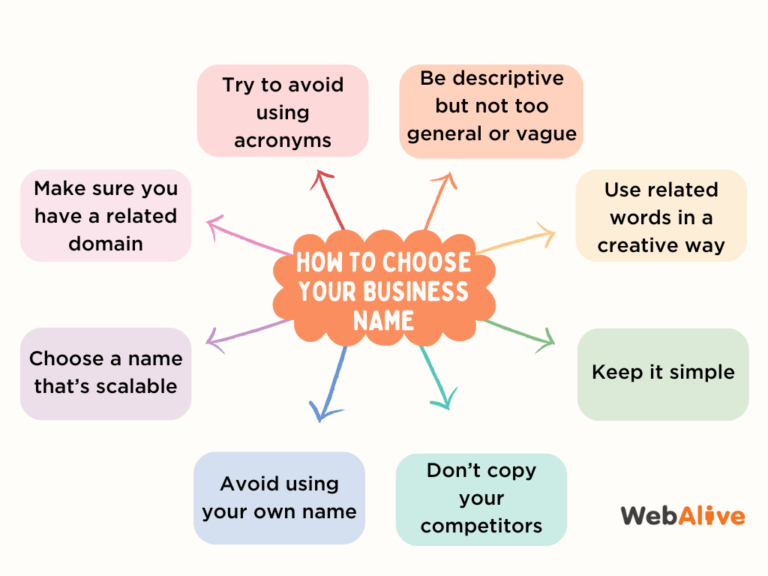
Generate several potential names and evaluate them according to simplicity, originality, relevance, memorability, and availability.
Do not rush this decision. A strong name should support your current business direction while allowing reasonable future expansion.
Step 6: Create Your Visual Identity
Develop a logo, color palette, typography system, and basic design guidelines. Make sure your visual elements work together and remain consistent across different platforms.
Step 7: Establish Your Brand Voice
Decide how your business will communicate with customers. Your tone should match your audience and industry.
For example, an educational brand may use a helpful and informative tone, while a luxury brand may use more refined and sophisticated language.
Step 8: Build Your Digital Presence
Create a professional website and establish relevant social media profiles. Make sure your business name, descriptions, contact details, and visual identity are consistent.
Step 9: Communicate Your Value Clearly
Explain what you offer, who benefits from your products or services, and why customers should consider your business.
Step 10: Review and Improve Your Branding
Branding is an ongoing process. Collect feedback, monitor customer responses, and review your messaging as your business develops.
Creative Future Vision provides practical startup branding inspiration to help entrepreneurs approach these decisions with greater clarity.
Creative Online Store Name Ideas for E-Commerce Businesses
An online store needs a name that works well across digital platforms. It should be easy to remember, simple to search for, and suitable for the products you sell.
Whether you are launching a clothing store, beauty shop, electronics business, handmade product store, or general e-commerce website, your store name is an important part of your online identity.
What to Consider Before Naming an Online Store
Product Category: Consider whether your store name should describe your product category or communicate a broader lifestyle or brand concept.
Domain Availability: Check whether an appropriate domain name is available. A relevant and recognizable domain can make it easier for customers to find your store.
Social Media Availability: Review usernames across the social media platforms you intend to use.
Spelling and Pronunciation: Choose a name that customers can easily spell and share.
Brand Expansion: Avoid limiting your store name to one product if you expect to expand into additional categories.
Customer Expectations: Your name should support the type of shopping experience you want to create.
Different Naming Styles for Online Stores
Minimalist names can communicate simplicity and modern design. Descriptive names can help customers understand the product category. Invented names can create distinctive identities, while emotional names can connect with a particular lifestyle or audience.
The right approach depends on your products, positioning, competition, and long-term plans.
Our online store naming guides explore these approaches and provide inspiration for entrepreneurs who want to establish a recognizable e-commerce brand.
How to Create a Memorable Brand Identity on a Small Budget
You do not need a large marketing budget to begin developing a professional brand identity. Small businesses can build a recognizable presence by making thoughtful decisions and maintaining consistency.
The most important starting point is clarity. Understand your audience, define your message, and select visual elements that support your business purpose.
Practical Budget-Friendly Branding Strategies
Start with a Clear Brand Strategy: Write down your business purpose, audience, main services, and key differentiators.
Choose a Simple Logo: Avoid unnecessarily complicated designs. A clean logo is often easier to use across websites, packaging, documents, and social media.
Use a Limited Color Palette: Select a small number of complementary colors and apply them consistently.
Create Basic Brand Guidelines: Document your logo variations, colors, fonts, writing tone, and image preferences.
Build a Professional Website: Your website should communicate your offering clearly and provide a straightforward user experience.
Use Consistent Social Media Templates: Reusable design templates can help maintain a recognizable appearance while reducing production time.
Create Helpful Content: Publish useful articles, guides, and educational resources that answer questions your potential customers are searching for.
Collect Customer Feedback: Listen to your audience and use their feedback to improve your communication and customer experience.
Why Consistency Matters
A business may have an attractive logo, an excellent website, and professional social media graphics, but inconsistent branding can make the overall identity feel disconnected.
For example, using different business descriptions, unrelated colors, inconsistent logos, and changing communication styles can confuse customers.
A consistent brand experience helps people connect different interactions with the same company. Over time, this can support recognition and familiarity.
Business Naming Mistakes You Should Avoid
Choosing a business name involves creativity, but it also requires practical evaluation. A name that sounds interesting may not necessarily work well in the real world.
Here are some common mistakes to avoid.
1. Choosing a Name Without Research
Always investigate whether another business already uses the same or a confusingly similar name.
2. Using Difficult Spellings
Names with confusing spellings can create challenges when customers try to find your business online.
3. Following Trends Too Closely
Trendy names may feel modern today but can become outdated. Consider whether your chosen name will remain suitable over time.
4. Ignoring Your Target Audience
A name should make sense for the people you want to reach. Consider how your audience might interpret and pronounce it.
5. Selecting an Overly Restrictive Name
A name that describes only one product or location may create limitations if your company expands.
6. Forgetting Domain and Trademark Checks
Before investing in branding materials, review domain availability, business registration requirements, and trademark considerations.
7. Choosing a Name Only Because You Like It
Personal preference is important, but your business name should also support your brand positioning and customer communication.
The Importance of Digital Branding in a Competitive Market
Customers interact with businesses through multiple digital channels. They may discover a company through a search engine, visit its website, view social media content, read reviews, or compare its products with competitors.
This makes digital branding an important part of building a recognizable business.
A strong digital identity helps communicate your business purpose consistently across online platforms.
Website Branding
Your website is often one of the first places customers explore when researching a business. It should communicate your brand clearly through its design, navigation, content, and overall user experience.
Use consistent colors, typography, imagery, and messaging throughout the website.
Make important information easy to find, including your services, business background, contact information, and relevant resources.
Social Media Branding
Social media provides opportunities to communicate your brand personality and share useful content.
Use consistent profile images, descriptions, colors, and content styles. Develop a recognizable approach to educational posts, announcements, product updates, and customer communication.
Content Marketing and Brand Authority
Helpful content can introduce your brand to people searching for answers related to your industry.
Publish informative articles, practical guides, tutorials, and resources that address genuine audience questions.
For example, a business naming website can publish articles about choosing company names, writing taglines, selecting brand colors, and developing startup identities.
Each article should offer meaningful information rather than simply repeating keywords.
Search Engine Optimization for Branding Websites
SEO helps search engines understand your website and connect its pages with relevant search queries.
For a website focused on business naming and branding, useful SEO practices include:
- Researching relevant business naming and branding keywords.
- Creating informative and original articles.
- Writing descriptive SEO titles and meta descriptions.
- Using clear H1, H2, and H3 headings.
- Creating logical internal links between related articles.
- Optimizing images with descriptive alt text.
- Maintaining a mobile-friendly website.
- Improving page speed and technical performance.
- Using descriptive and readable URLs.
- Reviewing search performance and updating content when necessary.
The goal is to create content that satisfies search intent and genuinely helps readers.
Explore Fresh Branding Perspectives and Creative Inspiration
Creativity is an important part of building a distinctive business identity. Sometimes the best ideas emerge when entrepreneurs explore different industries, naming styles, design approaches, and communication strategies.
At Creative Future Vision, we believe inspiration should lead to practical action.
Our articles are designed to introduce useful perspectives and help readers make informed decisions about their business identities.
You can explore topics such as:
- Creative business naming ideas.
- Catchy taglines for small businesses.
- Unique startup name inspiration.
- Online store naming strategies.
- Brand color selection.
- Memorable business identity development.
- Logo and visual identity inspiration.
- Small business branding tips.
- Brand personality and positioning.
- Naming mistakes and practical checklists.
Whether you are at the beginning of a business idea or improving an established company’s identity, exploring different perspectives can help you discover new opportunities.
Why Choose Creative Future Vision?
Finding reliable and practical information about business naming and branding can be challenging, especially when you are starting from scratch.
Creative Future Vision aims to make creative branding knowledge more accessible through easy-to-understand articles and actionable recommendations.
Practical and Understandable Guides
We focus on presenting branding and naming concepts in a clear way. Our goal is to help readers understand not only what to consider but also how to apply useful ideas to their own projects.
Inspiration for Different Business Types
Every business has different requirements. A technology startup, a local service provider, a fashion business, and an online store may need different naming and branding approaches.
Our content explores different industries and creative directions to provide relevant inspiration.
Focus on Memorable Brand Identities
We believe a strong brand identity should communicate purpose, personality, and value. Our guides explore the different elements that contribute to a recognizable and consistent brand.
Helpful Resources for Entrepreneurs
Starting a business involves many decisions. Our educational content is designed to support entrepreneurs as they explore names, taglines, brand colors, positioning, and digital branding.
Fresh Ideas and New Perspectives
Branding continues to evolve as customer expectations, digital platforms, and design trends change. We aim to explore fresh ideas while emphasizing timeless branding principles such as clarity, consistency, originality, and relevance.
Our Approach to Creative Business Development
At Creative Future Vision, we believe that developing a brand should be an organized and thoughtful process.
A creative idea becomes more valuable when it is supported by research, planning, and practical implementation.
Our recommended approach includes five important stages.
Discover: Understand your business concept, target audience, industry, and goals.
Explore: Research naming possibilities, brand positioning, competitors, and visual inspiration.
Define: Select a suitable brand name, establish your messaging, and identify your visual direction.
Develop: Create your brand identity through consistent design, content, and digital communication.
Improve: Review your brand performance, collect feedback, and make improvements as your business grows.
This process provides a useful framework for entrepreneurs who want to approach branding with greater confidence.
Frequently Asked Questions About Business Naming and Branding
1. What is the importance of choosing the right business name?
A business name creates an initial impression and helps customers identify your company. A memorable and relevant name can support brand recognition, communication, and differentiation in a competitive market.
2. How do I come up with creative business name ideas?
Start by identifying your business purpose, audience, products, services, and personality. Create a list of relevant words, explore different naming styles, combine meaningful terms, and evaluate the results for originality, simplicity, and availability.
3. What makes a business name memorable?
A memorable business name is generally easy to pronounce, spell, recognize, and communicate. Originality and relevance also help create a distinctive identity.
4. How do I choose a brand name for my startup?
Consider your startup’s mission, target audience, industry, and future direction. Research competitors, brainstorm several options, check availability, and select a name that supports your long-term business goals.
5. What is the difference between a business name and a brand identity?
A business name identifies your company, while brand identity includes the wider collection of visual and verbal elements that communicate its personality. These include the logo, colors, typography, messaging, and overall presentation.
6. How important are brand colors?
Brand colors contribute to your visual identity and help create consistency across marketing materials. Appropriate color choices can support your desired brand personality and improve recognition.
7. How can I create a professional brand on a small budget?
Begin with a clear business strategy, choose a simple logo, establish a consistent color palette, select readable typography, and create a professional website. Focus on consistency rather than spending unnecessarily on complicated design elements.
8. What should I consider before choosing an online store name?
Consider your product category, target customers, spelling, pronunciation, domain availability, social media usernames, competitor names, and potential business expansion.
9. What is a business tagline?
A business tagline is a short phrase that communicates your brand’s message, value, or personality. It supports your business name and can help customers understand what makes your company distinctive.
10. How can I make my brand stand out from competitors?
Understand your audience, research your competitors, communicate your unique value, develop a recognizable visual identity, and provide a consistent customer experience.
11. Can I change my business name later?
Yes, businesses can rebrand or change their names, but the process may involve legal, operational, marketing, and customer communication considerations. It is generally better to research your options carefully before launching.
12. How does SEO help a branding and naming website?
SEO helps your articles appear for relevant search queries. By publishing useful content around business naming, startup branding, taglines, and brand identity, you can attract readers who are actively researching these subjects.
13. Should my business name include keywords?
Not necessarily. A business name should primarily support your brand identity. Relevant keywords can be incorporated naturally into your website content, page titles, descriptions, and headings instead of forcing them into the business name.
14. How often should I update my brand identity?
There is no fixed schedule. Review your branding when your business strategy, target audience, product range, or market positioning changes. Minor improvements can maintain relevance without requiring a complete rebrand.
15. Where can I find business naming and branding inspiration?
Creative Future Vision offers informative articles, naming inspiration, branding guides, and creative perspectives to help entrepreneurs explore ideas for their next business or creative project.
Start Building Your Brand with Creative Future Vision
Every memorable brand begins with a vision. Whether that vision involves launching a new company, introducing an innovative product, opening an online store, or developing a more recognizable business identity, the right creative direction can help transform your plans into something meaningful.
Choosing a business name, developing a tagline, selecting brand colors, and building a consistent identity are important steps in communicating your value to the world.
You do not need to have every answer before beginning. Start by understanding your idea, exploring your options, and making thoughtful decisions about how you want your business to be recognized.
Creative Future Vision is here to provide fresh perspectives, practical naming guides, branding inspiration, and educational resources that help make the process easier to understand.
Explore our latest articles, discover new creative approaches, and find useful ideas for your next business, startup, or creative project.